Hear from Our Customers
You’re not looking for the cheapest option. You’re looking for the right one—products that are tested, labeled correctly, and sold by people who know what they’re talking about.
That’s harder to find than it should be. With nearly 1,400 unlicensed shops shut down across New York in the past year, the illegal market is still everywhere. Those shops don’t test their products. They don’t follow dosing standards. And when something goes wrong, there’s no one to hold accountable.
Here’s what changes when you buy from a licensed dispensary. You get a Certificate of Analysis that shows exactly what’s in your product—potency, contaminants, pesticides, everything. You get staff who can explain the difference between a sativa and an indica, or why that gummy hits differently than flower. And you get the legal protection that comes with shopping somewhere the state actually regulates.
We operate as a fully licensed dispensary under New York State’s Office of Cannabis Management. That means every product we carry has been tested by a third-party lab before it reaches our shelves.
We’re located in Utopia, serving the broader Queens community—from Flushing and Bayside to Fresh Meadows and beyond. This area has seen dozens of dispensaries open in the past year, but not all of them are operating legally. We are. And that matters more than most people realize.
Our team knows this market. We know what’s changed since legalization, what consumers are asking for, and what red flags to watch out for. If you’ve never bought legal cannabis before, we’ll walk you through it. If you’re experienced, we’ll help you find exactly what you’re looking for.
First, you’ll need a valid ID showing you’re 21 or older. That’s non-negotiable under New York law.
When you arrive, our staff will check you in and answer any initial questions. If you’re new to cannabis or trying a new product type, let them know. They’ll walk you through formats, dosing, and what to expect. If you already know what you want, they’ll help you find it fast.
Every product comes with clear labeling—THC and CBD content, serving size, lab test results. You’ll see the Certificate of Analysis either on the packaging or available to review in-store. That documentation is required by the state, and it’s your guarantee that what’s on the label matches what’s in the product.
Once you’ve made your selection, payment is handled on-site. We’ll provide a receipt, and you’re good to go. If you have questions after your purchase, you can always come back or reach out. We’re not here to make one sale—we’re here to build trust with the local community.
Ready to get started?
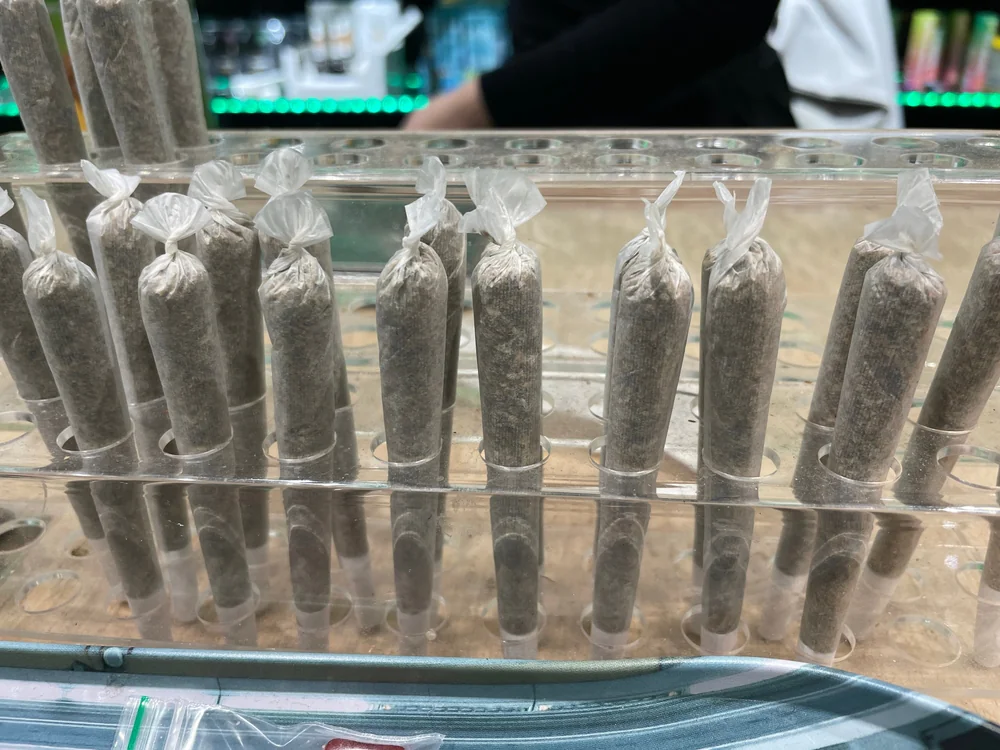
We carry flower, edibles, vapes, concentrates, and accessories. Each category serves a different need, and our staff can help you figure out which one makes sense for you.
Flower is still the most popular option, especially for people who want control over dosage and prefer traditional consumption methods. We stock a rotating selection of strains—sativa, indica, and hybrid—so you can find something that fits your tolerance and desired effect.
Edibles have exploded in New York, with gummies accounting for nearly 90% of edible sales statewide. They’re discreet, easy to dose, and don’t require any equipment. The trade-off is timing—edibles take longer to kick in, usually 30 to 90 minutes, and the effects last longer. If you’re new to edibles, start with a low dose. Seriously.
Vapes and concentrates are for people who want higher potency or faster onset. These products are more concentrated than flower, so a little goes a long way. If you’ve never used a concentrate before, ask questions first. Our team will make sure you understand how to use it safely.
Queens has become one of the densest cannabis markets in New York, with licensed dispensaries now operating across Flushing, Bayside, Forest Hills, Jamaica, and the Rockaways. That’s good for consumers—it means more selection, more competition, and better pricing. But it also means you need to know who’s licensed and who’s not. We are. And we’ll gladly show you the documentation to prove it.
Check the New York State Office of Cannabis Management website. They maintain a public list of every licensed dispensary in the state, searchable by county and zip code.
If a shop isn’t on that list, it’s not legal—no matter what the storefront says. More than 1,400 unlicensed shops were shut down in the past year, and many of them looked legitimate from the outside. They had signage, websites, and product displays. But they weren’t tested, weren’t regulated, and weren’t safe.
Licensed dispensaries are required to display their license in-store. If you don’t see it, ask. If they can’t produce it, leave. It’s that simple.
Testing, accountability, and legal protection. Those are the three things you lose when you buy from an unlicensed shop.
Licensed dispensaries can only sell products that have passed third-party lab testing. That testing checks for potency, pesticides, heavy metals, mold, and other contaminants. If a product fails, it doesn’t make it to the shelf. Unlicensed shops don’t test anything. You’re trusting whatever they tell you, and there’s no way to verify it.
Licensed dispensaries are also subject to state inspections, compliance checks, and consumer protection laws. If something goes wrong, you have recourse. If you buy from an unlicensed shop and get a bad product, you’re on your own. No refunds, no accountability, no legal options.
Yes. New York has some of the highest cannabis prices in the country right now, with an average item price around $31 in early 2026.
That’s driven by a few factors. Supply is still catching up to demand as more licensed growers come online. Regulatory costs are high, and those get passed down to consumers. And New York’s market is still young—prices tend to drop as competition increases and the supply chain matures.
The good news is that pricing is starting to shift. Dispensaries are now allowed to run loyalty programs, offer discounts, and bundle products. That wasn’t permitted until late 2025, so you’re starting to see more competitive pricing across the board. If price is a concern, ask about first-time customer deals or loyalty points. We’re actively working to make legal cannabis more accessible.
Start with a low-dose edible or a mild flower strain. Don’t go for the highest THC percentage you can find—that’s a common mistake.
For edibles, look for something in the 2.5mg to 5mg range per serving. Take one serving, wait at least 90 minutes, and see how you feel. Don’t take more just because you don’t feel it right away. Edibles take time, and taking too much too soon is the fastest way to have a bad experience.
For flower, ask for a strain with balanced THC and CBD, or something on the lower end of the potency spectrum. A budtender can point you toward options that are less likely to cause anxiety or paranoia, especially if you let them know you’re new. And if you’re smoking or vaping, take it slow. One or two hits, then wait. You can always take more—you can’t take less once it’s in your system.
Yes, but only from licensed delivery services. New York allows licensed dispensaries to offer delivery, and there are also standalone delivery-only licenses.
If you’re searching for “dispensary delivery near me” or “cannabis delivery,” make sure the service is licensed. The same rules apply—check the state’s official list, and don’t trust a service just because it has a website or an app.
Delivery is convenient, especially if you’re not near a physical dispensary or prefer to shop from home. Just know that delivery services are required to verify your age and identity at the door, so have your ID ready. And like in-store purchases, everything should come with proper labeling and documentation. If it doesn’t, that’s a red flag.
A Certificate of Analysis, or COA, is a lab report that shows exactly what’s in a cannabis product. It lists THC and CBD percentages, terpene profiles, and test results for contaminants like pesticides, heavy metals, and mold.
In New York, every cannabis product sold at a licensed dispensary must have a COA from a state-approved lab. That’s not optional—it’s the law. If a dispensary can’t show you a COA for a product, they’re either not licensed or they’re selling something that didn’t pass testing.
You don’t need to be a scientist to read a COA, but you should at least glance at it. Look for the THC percentage to understand potency. Check the test date to make sure it’s recent. And scan the contaminant section—everything should say “pass” or show results below the state’s safety limits. If you see anything that says “fail” or shows high levels of something concerning, don’t buy it. We’ll walk you through the COA if you ask. If a dispensary brushes you off or acts like it’s not important, that’s a problem.